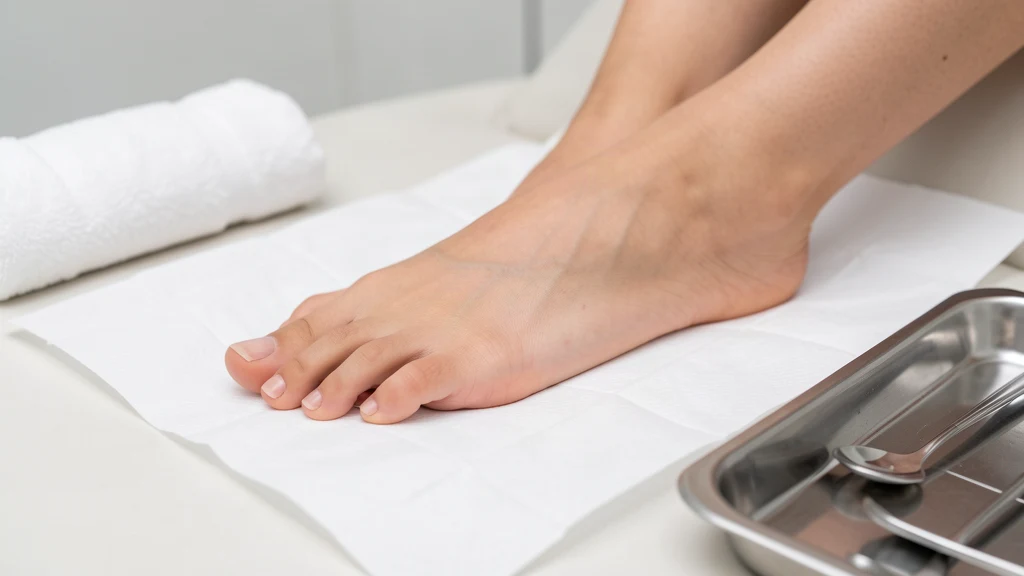
An ingrown toenail happens when the edge of the nail presses into the skin beside it and grows into it. The toe becomes sore, then red and swollen, and it can become infected. It most often affects the big toe. Trimming the nail at home sometimes settles it, and sometimes does not — a nail that keeps growing back into the same spot usually needs the edge removed properly rather than cut shorter. At Accord Medical Clinic in Ubi the doctor examines the toe, works out why it keeps recurring, and decides whether the nail edge should be removed, and whether that can be done in the clinic.
Accord Medical Clinic provides ingrown toenail removal at its clinic at Blk 325 Ubi Avenue 1, Singapore 400325. The doctor examines the toe first, and where removal is appropriate takes away the ingrowing edge of the nail together with the corresponding part of the nail bed under local anaesthetic. Not every ingrown toenail needs this — some settle with care, footwear changes and correct trimming, and suitability is decided at consultation.
What this covers
Pain along one edge of the nail, worse in shoes
Redness, swelling or warmth of the skin beside the nail
An infected toe that keeps coming back
A nail edge that grows back into the skin after trimming
Trimming at home that has stopped helping
Examination of the toe before any procedure
Wedge resection of the ingrowing nail edge, where appropriate
Advice on trimming, footwear and keeping the toe clean
Review after the procedure
Referral where the toe needs specialist care
Ingrown toenail removal at the clinic
Wedge resection of an ingrown toenail
An ingrown toenail that keeps returning, or that has caused repeated infection of the skin around the nail, can be treated by removing the affected edge of the nail together with the corresponding part of the nail bed, under local anaesthetic. Taking the nail bed as well as the nail is what reduces the chance of the same edge growing back into the skin.
Part of the nail matrix may also be treated to reduce regrowth further. This is decided for that toe, not for ingrown toenails in general.
The procedure is done in the clinic treatment room. You will be shown how to care for the toe while it heals, when it can get wet, and what to watch for, and a review appointment is usually arranged.
An ingrown toenail with spreading infection, or one in a foot with poor circulation or reduced sensation, may need different care, and the doctor will tell you if that applies to you.
This page is general information about ingrown toenail removal at the clinic. It is not a substitute for an examination, and whether removal is appropriate is decided by the doctor at your visit.
What happens at your appointment
01
The doctor examines the toe, asks how long it has been sore and what you have already tried.
02
You are told what can be seen — an inflamed edge, an infection, or another cause of the pain.
03
Where the nail edge needs removing, the toe is numbed with local anaesthetic first.
04
The ingrowing edge of the nail is removed, together with the part of the nail bed it grows from.
05
The toe is dressed, and you are shown how to care for it while it heals.
06
A review is arranged, and you are told what to expect over the following days.
Questions about ingrown toenail removal at the clinic
How do I know if my toenail is ingrown?
An ingrown toenail usually causes pain along one edge of the nail, with redness and swelling of the skin beside it. The skin can become warm and, if it is infected, discharge pus. Because an infection or a fungal problem can look similar, the toe is examined rather than diagnosed from the description.
Will the whole nail be removed?
Usually not. In a wedge resection only the ingrowing edge of the nail is taken, together with the part of the nail bed it grows from. Removing the whole nail is a different procedure and is not what is normally done for a single ingrowing edge.
Is the procedure painful?
The toe is numbed with local anaesthetic before anything is done, so the procedure itself is not felt. When the anaesthetic wears off the toe is sore for a day or two, and you will be told what pain relief to use and how to care for the dressing.
Will the nail grow back ingrown again?
Removing the nail bed as well as the nail edge is what reduces the chance of the same edge growing back into the skin. Some people still need further treatment later, and the doctor will explain what makes recurrence more likely for you.
How long does the toe take to heal?
The skin usually settles over one to two weeks, while the nail takes longer to regrow. You will be given advice on footwear, keeping the toe clean, and when it can get wet, and a review is usually arranged.
Can I have this done if I have diabetes?
It can be done, but a foot with reduced sensation or poor circulation needs particular care and is assessed first. Tell the doctor about diabetes or any circulation problem when you book so the toe can be looked at properly.
Do I need a referral?
No referral is needed and you can book directly with the clinic. If the toe needs specialist care, the doctor explains why and arranges the referral.
Hi! 👋 I'm Accord's health assistant. Ask me anything about our weight-loss programme, GLP-1 treatment, costs, or clinic hours — try typing a question below, e.g. "How does GLP-1 work?"
I give general information, not medical advice — the doctor has the final word.
Answers are from the clinic's published content and are not a substitute for a consultation.