
GLP-1 Explained
Tirzepatide in Singapore: How This Weight Loss Injection Works
Tirzepatide is a prescription weight loss injection registered in Singapore. How the dual GIP and GLP-1 agonist works, who it suits, and what supervised care involves.
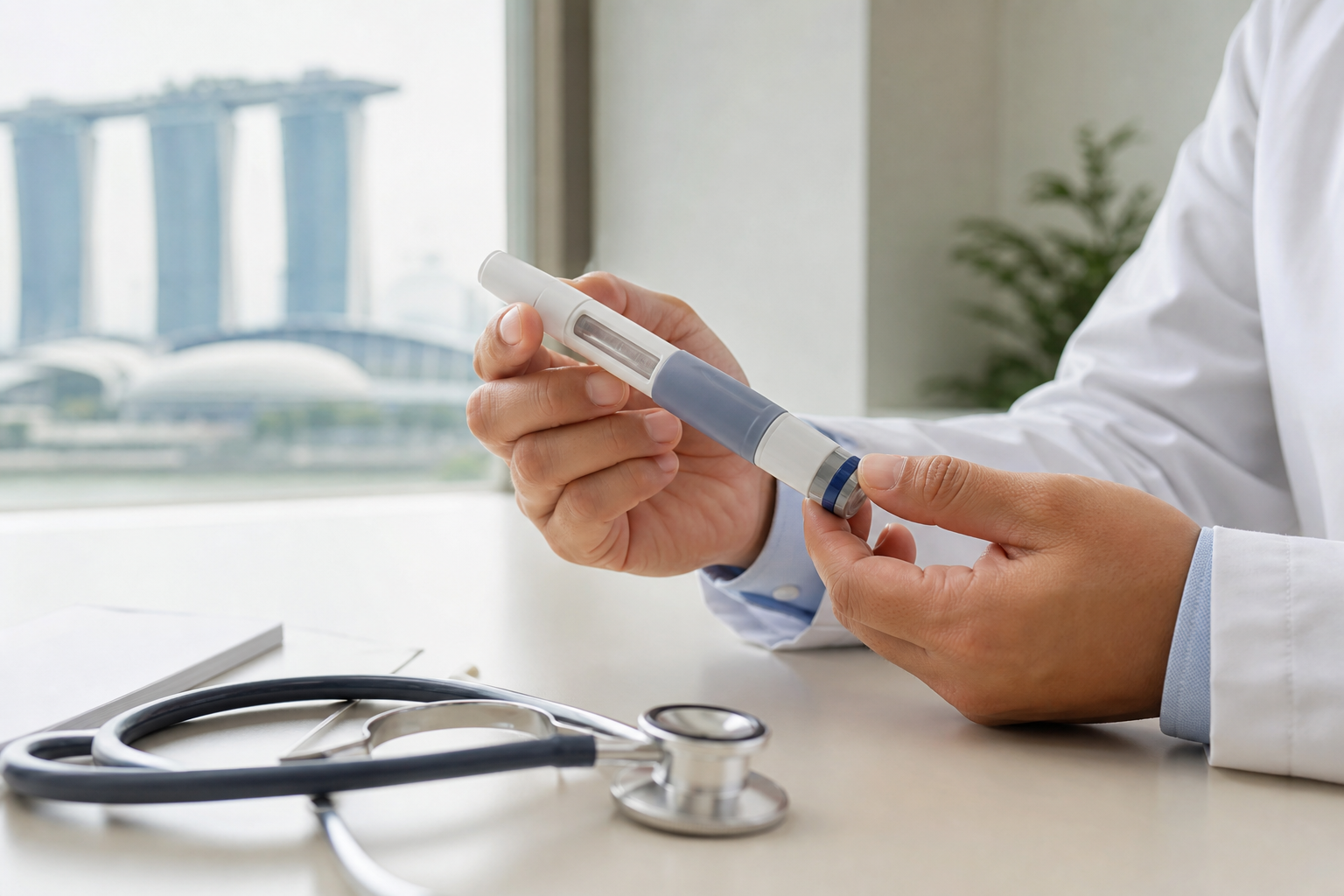
Most weight-loss injections are discussed by brand name, which is a strange way to choose a medicine. This page is about the molecule itself — tirzepatide — because understanding what it does is what lets you judge whether it is appropriate, and what to ask about.
It is a prescription-only medicine in Singapore. Nothing on this page is a substitute for the assessment that decides whether you should take it.
What tirzepatide is
Tirzepatide is a once-weekly injection that acts on two hormone receptors at the same time: GIP (glucose-dependent insulinotropic polypeptide) and GLP-1 (glucagon-like peptide-1).
Both are incretin hormones — signals the gut releases after eating. Between them they influence how full you feel, how quickly the stomach empties, how much insulin is released in response to a meal, and how much glucagon is produced. Tirzepatide is deliberately engineered to bind both receptors, with a stronger pull towards GIP.
That “dual” action is the whole idea. It is not a stimulant, it does not burn fat directly, and it does not bypass the laws of energy balance. It changes the appetite and metabolic signalling that make eating less feel sustainable rather than constant.
How it differs from a single-agonist injection
Semaglutide acts on GLP-1 alone. Tirzepatide adds GIP.
That difference is real in mechanism and in trial outcomes, but it is not a ranking. Trial populations differ, tolerability differs between individuals, and the medicine that suits you is a clinical judgment based on your history — not a league table from a website. Anyone presenting one as simply “stronger”, or as winning a comparison, is selling rather than explaining.
What matters more than the molecule is the programme around it: who assesses you, who adjusts the dose, who you call when something feels wrong, and what happens when treatment ends.
What it is licensed for in Singapore
The Singapore product information lists two indications for tirzepatide:
- Type 2 diabetes — for adults, adolescents and children aged 10 and above whose blood sugar is not adequately controlled, alongside diet and exercise.
- Weight management — as an adjunct to a reduced-calorie diet and increased physical activity, for weight loss and weight maintenance, in adults with an initial BMI of:
- 30 kg/m² or above (obesity), or
- 27 to below 30 kg/m² (overweight) with at least one weight-related condition such as high blood pressure, abnormal cholesterol, obstructive sleep apnoea, cardiovascular disease, prediabetes or type 2 diabetes.
So weight management is a licensed use here, within those thresholds, prescribed after assessment. It is also prescription-only: it cannot lawfully be sold over the counter, online, or through a messaging app, and a seller who offers it that way is not a shortcut — they are the reason counterfeit and badly stored injectables circulate.
Who it may suit, and who it does not
May be reasonable to consider if your BMI is in the licensed range, previous attempts at diet and activity have not held, and you have weight-related conditions that treatment would help.
Generally not appropriate if you are pregnant, planning pregnancy or breastfeeding; if you have had a serious allergic reaction to tirzepatide; or if you or your family have a history of medullary thyroid carcinoma or multiple endocrine neoplasia syndrome type 2 — both listed as contraindications. A history of pancreatitis, significant gastrointestinal disease or gallbladder problems needs a proper conversation rather than an automatic answer.
What supervised treatment looks like
Assessment. Weight history, previous attempts, other medicines and conditions, blood pressure, and baseline bloods where indicated — kidney and liver function, HbA1c, lipids.
A plan you can repeat back. Starting dose, how and when it increases, what the first weeks may feel like, what to do about side effects, and what is being measured besides the scale.
Titration with review. Doses go up gradually because tolerance is individual. Reviews are where nausea gets managed, where a plateau gets examined, and where the plan changes if it should.
An exit plan. Appetite returns when the medicine stops. The maintenance plan — food, activity, muscle preservation, and how you will be followed up — is designed at the start, not improvised later.
Side effects worth knowing about
Most common are gastrointestinal: nausea, vomiting, diarrhoea, constipation, and early fullness that some people find uncomfortable. They usually ease as the dose stabilises, which is why titration is gradual.
Less common but more important: pancreatitis, gallbladder problems, and loss of muscle alongside fat when weight comes off quickly. Severe or persistent abdominal pain warrants medical review rather than patience.
Muscle matters more than most people expect. Enough protein and some resistance activity protect the tissue that keeps your metabolic rate up — which is exactly the tissue crash dieting costs you.
What treatment involves in cost terms
This page quotes no medicine figures: the amount depends on the dose you are prescribed, how long you stay on it, and who supplies it. Clinic fees are published in full on our weight loss treatment cost page, and any clinic should give you a written breakdown at each dose before you begin.
The question behind the search
People search for this molecule by name for two reasons: they have heard it works, and they want to know how to get it. The first is reasonable. The second is the reason a doctor is involved at all — not to gatekeep, but because appetite-suppressing medicine given without assessment, without baseline tests and without review is not treatment. It is a purchase.
Where this fits at Accord Medical
The medical weight loss programme begins with history and measurements. The GLP-1 guide explains the wider class of medicines, the cost page sets out fees, and the weight management questionnaire lets you give the doctor your history before your visit.
To talk it through, book a consultation — in clinic or by teleconsult.
This article is for informational purposes only and does not constitute medical advice. Always consult a qualified healthcare professional for medical concerns, diagnosis, or treatment. Accord Medical Clinic is an MOH-registered medical clinic in Singapore. Dr Joseph Wang (Family Physician) provides medical weight management consultations.
Medicine information referenced from the Singapore National Drug Formulary product information for tirzepatide, registration numbers SIN17257P–SIN17260P and SIN17352P–SIN17355P, last updated 9 October 2026. Mechanistic description consistent with published reviews of tirzepatide as a dual GIP/GLP-1 receptor agonist.
Frequently asked questions
What is tirzepatide?
Tirzepatide is an injectable prescription medicine given once a week. It acts on two hormone receptors — GIP and GLP-1 — which are involved in appetite signalling, how quickly the stomach empties, and how the body handles glucose after a meal.
Is tirzepatide legal in Singapore?
Yes. It is registered with the Health Sciences Authority as a prescription-only medicine, in both pre-filled pen and vial presentations. Registration means it can be prescribed by a doctor; prescription-only means it cannot be supplied any other way.
Is weight management a licensed use, or only diabetes?
Both are listed in the Singapore product information. For weight management it is licensed as an adjunct to a reduced-calorie diet and increased physical activity, for adults with a BMI of 30 or above, or 27 to below 30 with at least one weight-related condition.
How is tirzepatide different from semaglutide?
Semaglutide acts on the GLP-1 receptor. Tirzepatide acts on GLP-1 and GIP together. Different mechanisms, different trial populations and different tolerability — but not a simple ranking, which is why the choice belongs in a consultation rather than a comparison table.
How long does it take to work?
Appetite changes are often noticed within the first weeks, and dose increases are gradual by design so the body adjusts. Weight change is reviewed over months, not days, and a single week's reading matters very little.
Can I stop whenever I want?
You can stop, and you should decide how with your doctor. Appetite returns towards baseline after the medicine is withdrawn, so stopping without a maintenance plan is the most common route back to the starting weight.
